Eighty years before American Independence in 1684, eight hardy pioneers from Norwalk, arrived and purchased land from the Potatuck Indians and staked out a settlement that is now the city of Danbury.
These eight families, like all those in the Connecticut colony, were strict Congregationalists. The First Ecclesiastical Society, or governing body of the First Congregational Church, was chartered by the General Court in 1696 and a Meetinghouse was built. In the early days, the Society was also the governing body of the town of Danbury.
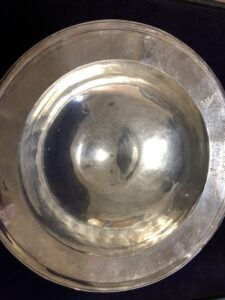
In 1753, a baptismal bowl, hammered from a solid piece of silver, was presented to the church by Comfort Starr in memory of three of his children who died in infancy. The inscription on the bowl reads: “The gift of Comfort Starr, Marcht in Danbury, Connecticut, N.E. to the Church of Christ in said town, August 25, 1753.” (New England is abbreviated as “N.E.”) We continue to use this bowl for the Sacrament of Baptism. 
In 1812 or 1813 the teaching of scripture texts to classes of boys and girls of color were held after the Sunday morning service.
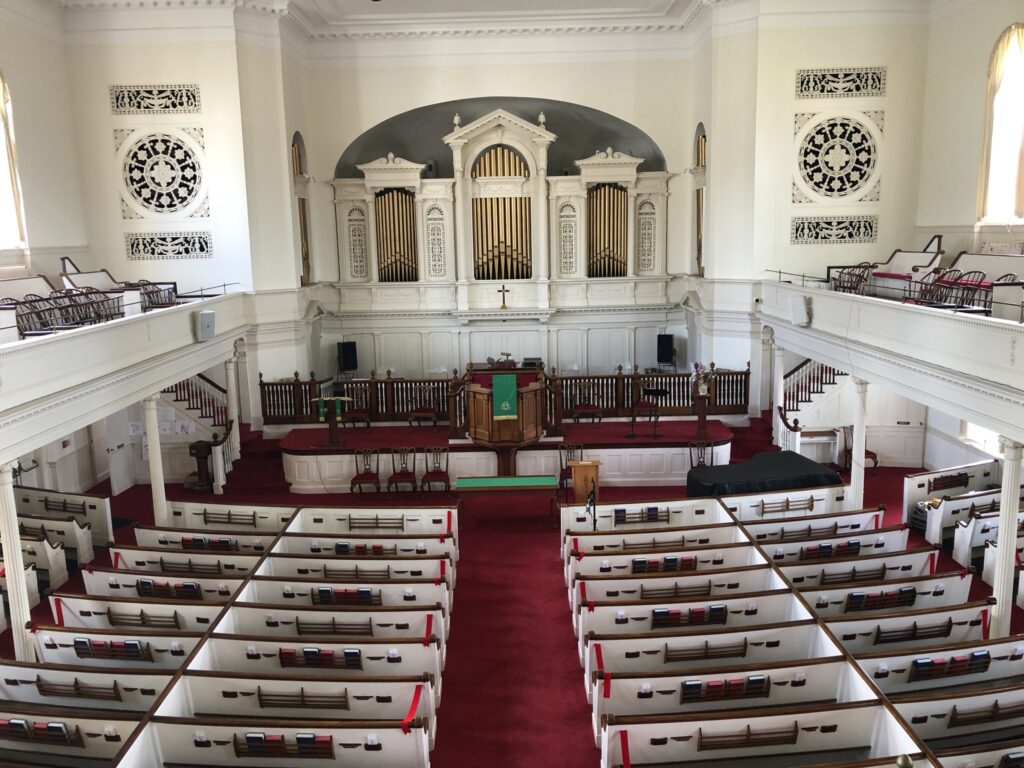
The First Congregational Church is now in its fifth Meetinghouse. The current Meetinghouse, along with its splendid organ, was dedicated in 1909.
In 1960 the congregation approved the constitution of The United Church of Christ and therefore, became a part of The United Church of Christ.
Throughout its history, the Church has strongly supported community service and social action. A highlight was the involvement and support of the Interfaith Social Action Corporation in obtaining sponsorship of the Beaver Street Housing Project in 1969.
In 2001, the Church became Open and Affirming and continues to serve people of all backgrounds.
Selected passages from A Faith Walk Through History, The First Congregational Church of Danbury, Connecticut as compiled by Nikki Foster, Church Historian, and printed in the 300th Anniversary book for the Church.
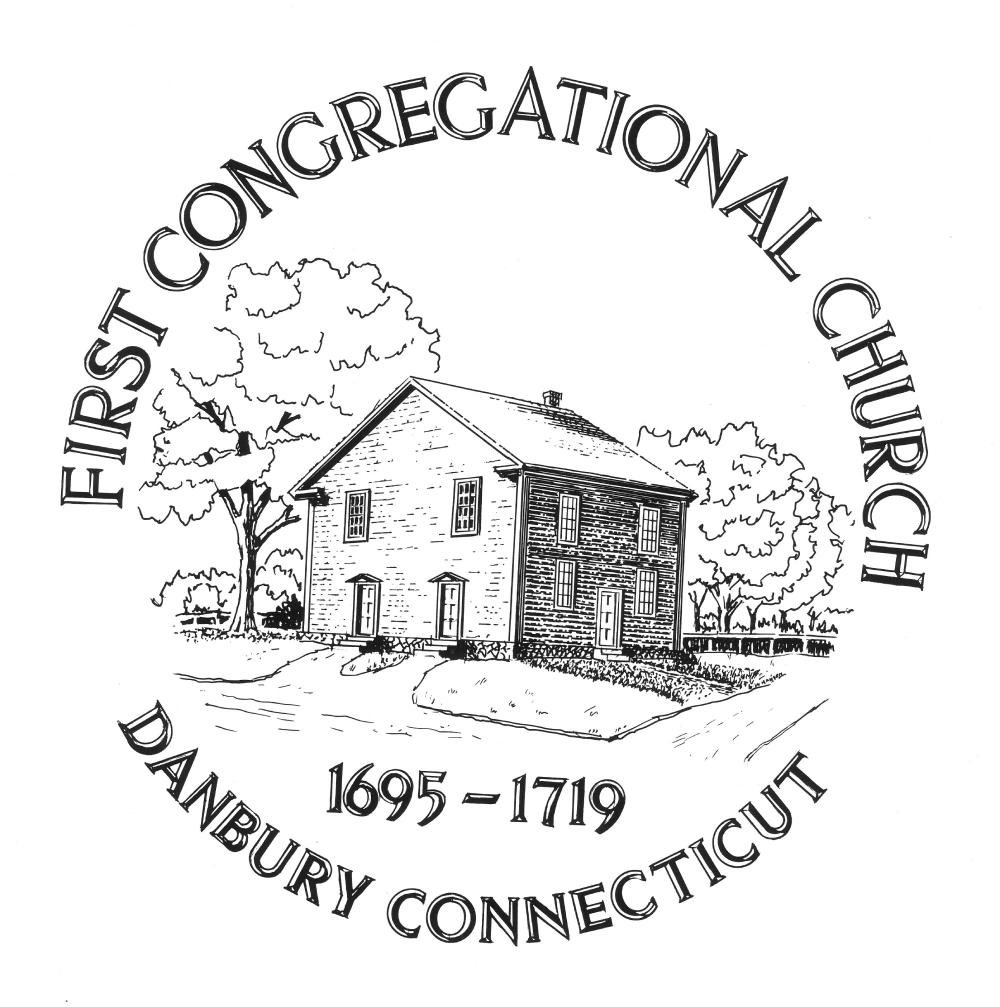
(The artwork of our Meetinghouses was created by artist and church member Leif Hansen.)
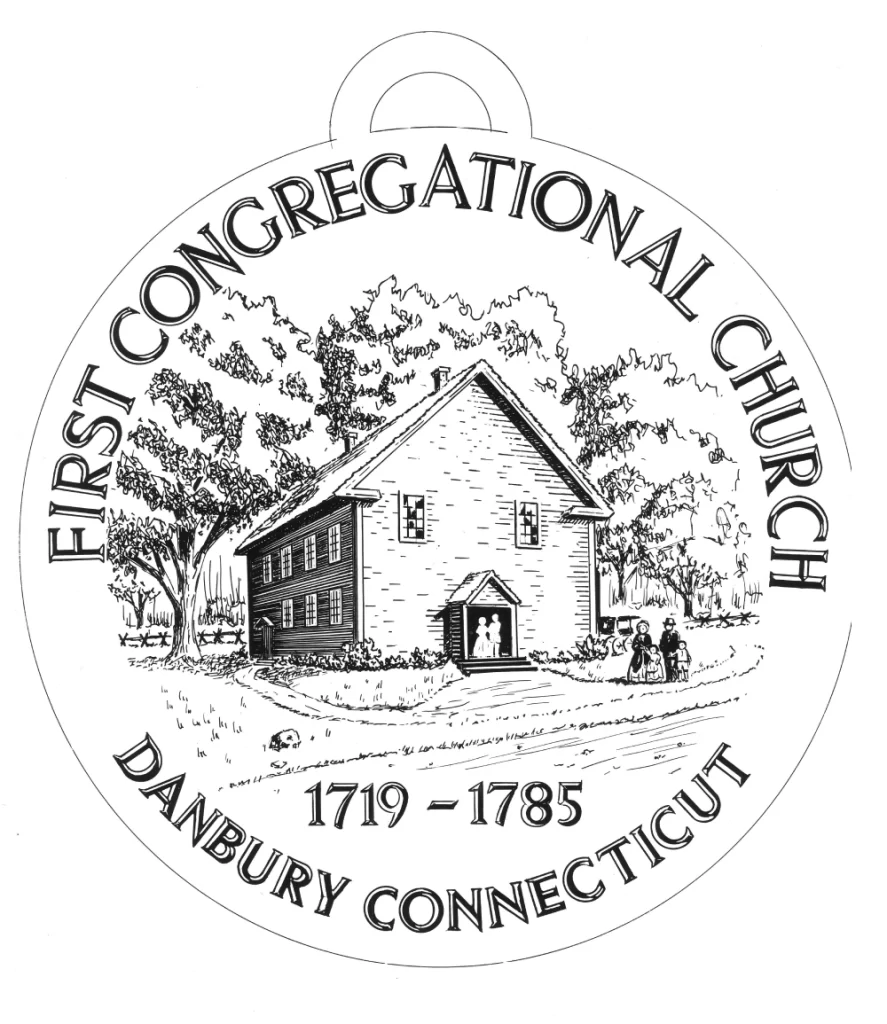
Our first Meetinghouse was built in 1695. Its dimensions were 30 X 40 feet. An engineering map of 1782 locates the Meetinghouse in the intersection of what is now called Wooster Street (then known as Deer Hill Road) and Main Street (then called the Town Street). The probable size of the first Meetinghouse is where the rock commemorating the British rate in 1777 now sits. The property included the old burying ground that is now located behind the Old Jail.
Since pictures or drawings of this Meetinghouse were not available, this image is the artist’s rendition as it is described in the church’s history, as well as from pictures of other buildings of that era.
The church records were consumed when the town was burned by the British in 1777; consequently, there are no writings of this early period in the history of the church. It may be inferred that there was an increase of population and the growth of the church under Mr. Seth Shove’s ministry, from the fact that the first Meetinghouse gave place to a larger structure in 1719. Its dimensions were 35 by 60 feet. It occupied the same site as a building it replaced at the intersection of Main Street and Worcester Street.
This image is also the artist’s rendition as it is described in the church’s history, and from pictures of other buildings of that era, because there were no pictures or drawings of the church
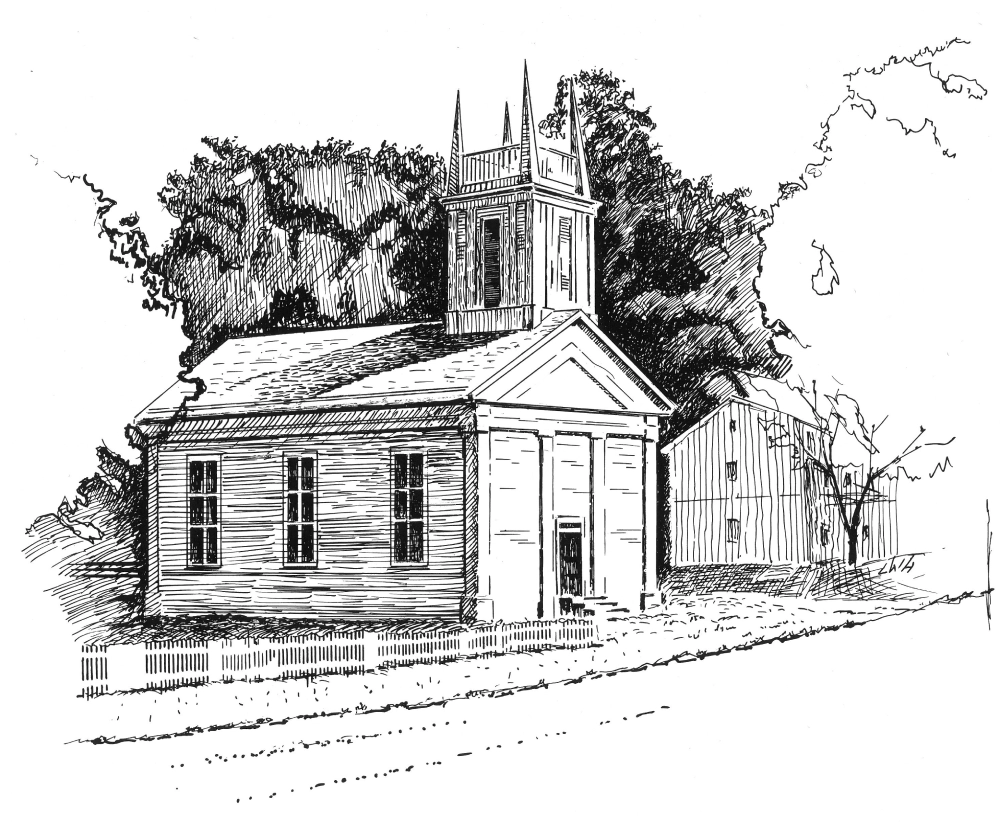
The third Meetinghouse was located at the intersection of Main Street and West Street. This Meetinghouse was built facing east and located at the foot of West Street where the soldiers monument for the defenders of the Union now stands. The building was 45 X 60 feet and had a spire 130 feet high at the Main Street front. The framework of the edifice was raised in October 1785 and enclosed the next year.
While outwardly the building was sufficiently comely for the times, the inside appearance was in accord with the dignified notions of the day. The pulpit was large and heavy and had above it a sounding board. Galleries ran around three sides of the room. In the center of the main floor were seats and about these seats were several rows of high box pews according to the old time designs and custom.
This building was altered in 1827 and again in 1837 when its spire, which had been its chief beauty for nearly half a century, was taken down and replaced by the square tower seen in pictures of the church. This house was occupied by the First Church society until 1858, when it became known as a concert hall. In 1878 it was removed.
The sketch for this Meetinghouse is from a photograph of the building.
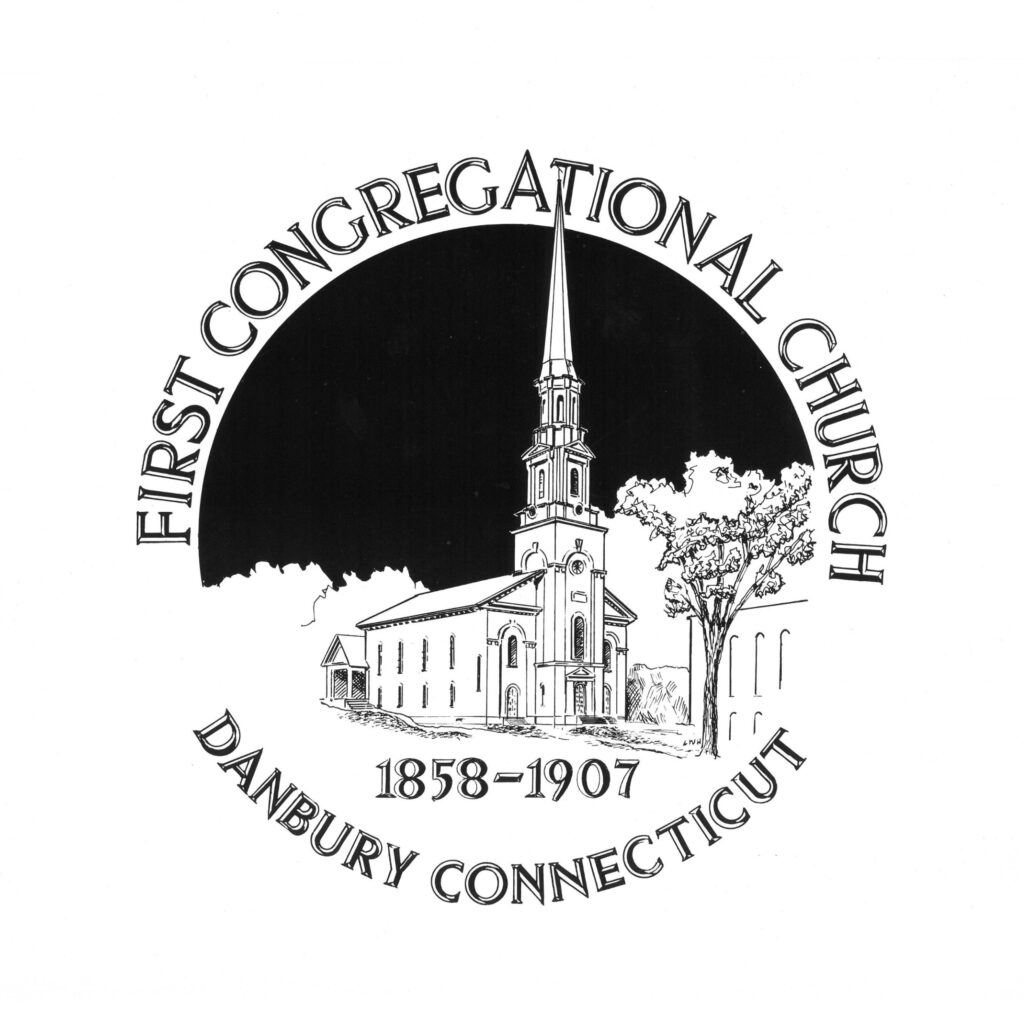
The fourth Meetinghouse was built in 1858 at the corner of Main Street and Chapel Place where Ives Bank now stands. It was located north of the former church. Its structure was simple and plain in outline but impressive through its simplicity with a spire of graceful proportions reaching 250 feet heavenward, and a deep-toned bell calling to worship and telling the hours to everyone within its sound. This building was the pride of the town.
It was dedicated April 28, 1858. In 1882 a chapel was added to the rear of the church 40 X 80 feet in size. The galleries were changed and the organ transferred from the front gallery to the rear of the pulpit. In 1892, an addition was made to the chapel to meet the requirements of the Sunday school. Newspaper articles (circa 1900 to 1906) reveal that a beautiful stained-glass window — the work of the Tiffany Studios, New York — was placed in one of the north windows of the Meetinghouse. It depicted the parable of “The Sower” as recorded in the Gospels. It was a gift in memoriam of Amos Starr Cook and his wife Juliette Cook, missionaries to the Hawaiian Islands in 1836.
This Meetinghouse served the congregation and community for 49 years, when — on the night of May 6, 1907, suddenly without warning — its material existence was ended by a devastating fire, bringing sorrow to many hearts and leaving nothing but ruins and ashes.
Reverend Harry Chamberlain is held in grateful remembrance for his courage, vision, and dynamic leadership displayed when the labor of generations lay in ashes the morning after the disastrous fire. Within two days of the disaster, the congregation began plans to build a new Meetinghouse.
The sketch for this Meetinghouse is from a photograph of the building.
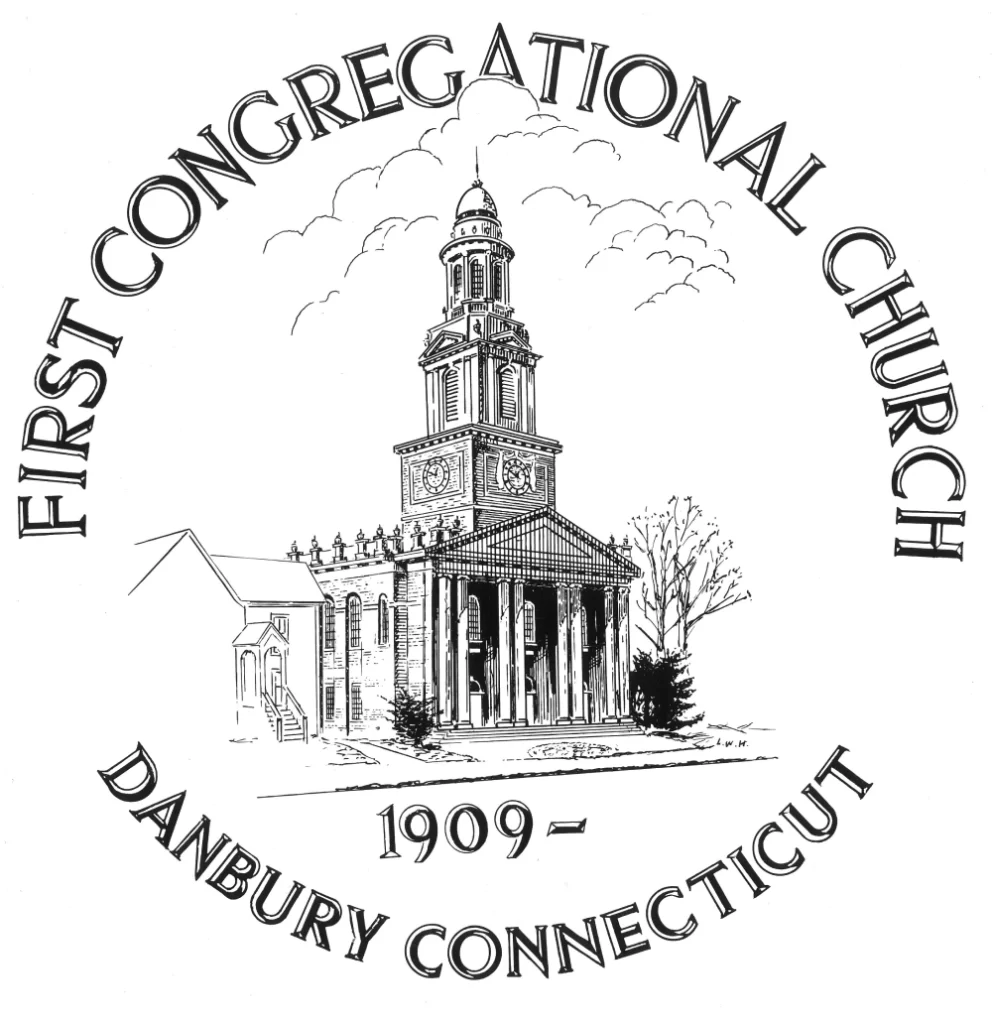
The fifth and present Meetinghouse is located at the corner of Deer Hill Avenue and West Street. The brick church of Georgian architecture that rose is a worthy successor to the one it replaced. It was dedicated on May 2 and 3, 19O9. We pray that our beautiful steeple and tower continue to be a beacon of hope and inspiration for many in the years to come. Our doors stand open to welcome those who would come in …
This sketch for this Meetinghouse is from a photograph of the building.